
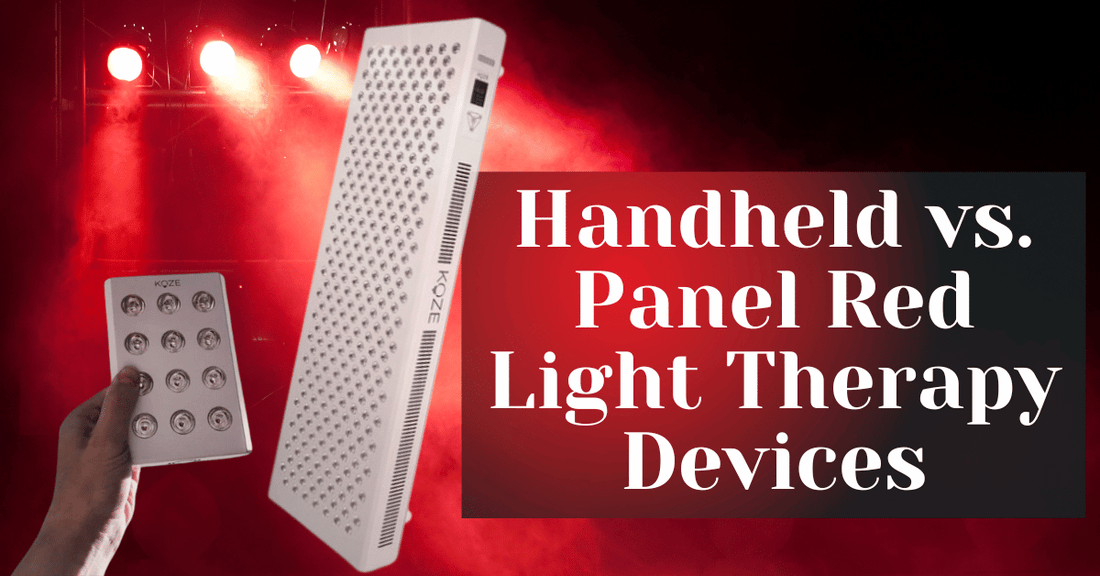
Handheld vs. Panel Red Light Therapy Devices
Handheld vs. Panel Red Light Therapy Devices
Red light therapy is a popular, non-invasive way to improve skin health, reduce pain, and support overall wellness. With so many device options available, it can be challenging to decide which one is right for you. Among the most common choices are handheld and panel devices, each offering unique benefits and features.
In this guide, we’ll break down the key differences between handheld and panel red light therapy devices, helping you determine which is best suited to your goals, lifestyle, and budget. Whether you’re a first-time user or looking to upgrade, this comparison will make your decision easier. Let’s get started!
What Are Handheld Red Light Therapy Devices?

Handheld red light therapy devices are compact and portable tools designed for targeted treatments. They are perfect for addressing specific areas like the face, joints, or localized muscle pain. These devices are user-friendly and ideal for beginners or those seeking a cost-effective introduction to red light therapy.
Key Features of Handheld Devices:
- Lightweight and easy to maneuver.
- Battery-powered or rechargeable for convenience.
- Adjustable settings for customized treatments.
Who Should Use Handheld Devices?
- Individuals looking for a portable, affordable option.
- Those who need therapy for small, specific areas.
- Beginners exploring red light therapy for the first time.
What Are Panel Red Light Therapy Devices?
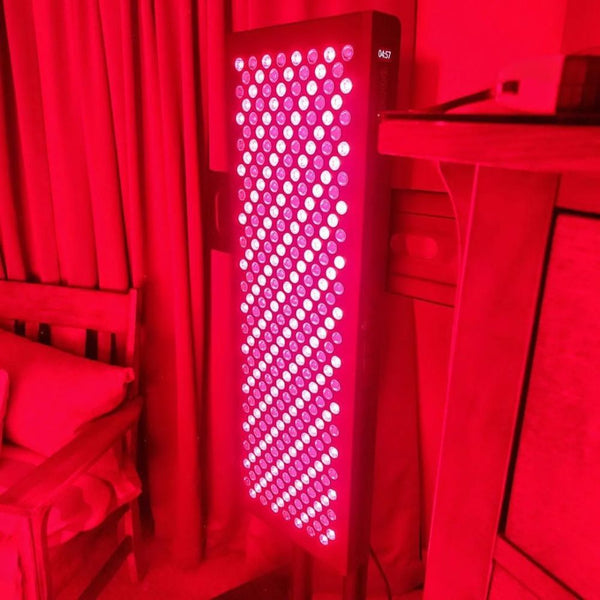
Panel red light therapy devices are larger, stationary units designed to cover more extensive areas of the body. These powerful devices are ideal for users who want efficient, full-body treatments or need to address multiple concerns simultaneously, such as muscle recovery, skin health, and overall wellness.
Key Features of Panel Devices:
- High power output for faster, more effective treatments.
- Covers larger areas, making it suitable for full-body therapy.
- Adjustable angles and settings for personalized use.
Who Should Use Panel Devices?
- Individuals seeking comprehensive or full-body treatments.
- Those with consistent red light therapy routines at home.
- Users looking to save time by treating multiple areas at once.
Key Differences Between Handheld and Panel Devices
When choosing between handheld and panel red light therapy devices, it’s important to consider their differences in functionality, convenience, and cost. Here’s a breakdown to help you decide:
1. Treatment Area
- Handheld Devices: Best for small, focused areas like the face, joints, or specific problem spots.
- Panel Devices: Designed to treat larger areas or even the whole body in a single session.
2. Portability
- Handheld Devices: Lightweight, compact, and travel-friendly, making them easy to use anywhere.
- Panel Devices: Stationary and better suited for home setups due to their size and weight.
3. Cost and Investment
- Handheld Devices: More affordable and budget-friendly, ideal for those just starting.
- Panel Devices: Higher upfront cost but more efficient for regular, large-area treatments.
4. Time Efficiency
- Handheld Devices: Require more time for treating large areas, as they target small spots at a time.
- Panel Devices: Save time with broader coverage, treating multiple areas simultaneously.
5. Power and Intensity
- Handheld Devices: Typically have lower power output, suitable for focused and gentle treatments.
- Panel Devices: Offer higher power levels, providing quicker and more effective results for large-scale therapy.
How to Choose Between Handheld and Panel Red Light Therapy Devices
Choosing the right red light therapy device depends on your goals, budget, and lifestyle. Here are some factors to consider:
1. Your Treatment Goals
- Handheld Devices: Ideal for targeting specific areas like facial wrinkles, acne, or joint pain.
- Panel Devices: Best for comprehensive treatments, such as improving muscle recovery or full-body skin rejuvenation.
2. Budget
- Handheld Devices: Perfect for those on a budget or exploring red light therapy for the first time.
- Panel Devices: A larger upfront investment but cost-effective for regular and extensive treatments.
3. Space and Convenience
- Handheld Devices: Compact and easy to store, suitable for small spaces or on-the-go use.
- Panel Devices: Require dedicated space but provide more convenience for home therapy routines.
4. Time Availability
- Handheld Devices: Work well if you have time for focused, smaller sessions.
- Panel Devices: Save time by treating larger areas in one session, ideal for busy schedules.
5. Frequency of Use
- Handheld Devices: Great for occasional or targeted use.
- Panel Devices: Better for frequent users who want consistent, full-body results.
Frequently Asked Questions (FAQs)
1. Which device is better for beginners?
Handheld devices are generally better for beginners due to their affordability, ease of use, and targeted application. They’re a great way to explore red light therapy without a big commitment.
2. Can I use both handheld and panel devices?
Yes, you can combine both types for a more versatile routine. For example, use a handheld device for small, hard-to-reach areas and a panel for larger or full-body treatments.
3. Are panel devices more effective than handheld devices?
Both are effective but serve different purposes. Panels are more efficient for treating larger areas, while handheld devices excel at targeted therapy.
4. What’s the average cost difference between the two?
Handheld devices typically cost less, ranging from $100 to $500, while panels are more expensive, often starting at $600 and going up depending on size and features.
5. Do I need special training to use these devices?
No, both types are user-friendly and come with clear instructions. Just follow the recommended usage guidelines provided by the manufacturer.
Conclusion
Choosing between handheld and panel red light therapy devices depends on your individual needs and goals. Handheld devices are perfect for targeted treatments, portability, and affordability, making them ideal for beginners or those focusing on specific areas. On the other hand, panel devices offer efficiency, larger coverage, and faster results, making them a great choice for full-body or frequent use.
By understanding the differences and evaluating your lifestyle, budget, and wellness priorities, you can select the device that fits you best. Ready to take the next step? Explore Koze Health’s premium selection of red light therapy devices and find the perfect match for your therapy journey!
Frequently Asked Questions
Can I achieve the same results with a handheld device if I'm willing to spend more time on treatments?
While handheld devices can be effective for targeted areas, they typically have smaller treatment zones and lower power output than panels. This means you would need significantly longer treatment sessions to cover larger body areas, and the depth of penetration may still be less than what a full-size panel provides. For full-body treatments or deeper tissue penetration, a panel device will generally deliver better results regardless of treatment duration.
How do I decide between a handheld and panel device if I have multiple treatment goals?
Consider which treatment area is your primary focus and how often you'll use the device. If you need both facial treatments and full-body therapy, a panel device offers more versatility, though some users choose to own both—using a panel for body treatments and a handheld for precise facial work. Evaluate your budget and space constraints, as panels require more investment and dedicated space but provide comprehensive coverage.
Are there situations where a handheld device would be better than a panel even for larger treatment areas?
Yes, handheld devices excel when you need to treat hard-to-reach areas like the back of knees, specific joint angles, or when traveling frequently. They're also preferable if you have very limited space, need to move between rooms regularly, or want to use red light therapy while doing other activities. However, for efficiency in treating larger surface areas, panels remain superior.
What should I look for in terms of power specifications when comparing handheld and panel devices?
Pay attention to irradiance (measured in mW/cm²) at a specific distance, wavelength options (660nm and 850nm are most common), and total power output. Panel devices typically offer higher irradiance over larger areas, while handhelds concentrate power in smaller zones. Ensure any device you consider provides third-party testing data and maintains therapeutic irradiance levels at your intended treatment distance.
Can I upgrade from a handheld to a panel later, or should I invest in a panel from the start?
If budget allows and you're committed to regular red light therapy, investing in a quality panel from the start is often more cost-effective long-term. However, starting with a handheld device is perfectly reasonable if you're uncertain about consistency or want to test red light therapy's effects on your specific concerns first. Many users who start with handhelds do eventually upgrade to panels as they expand their treatment goals.